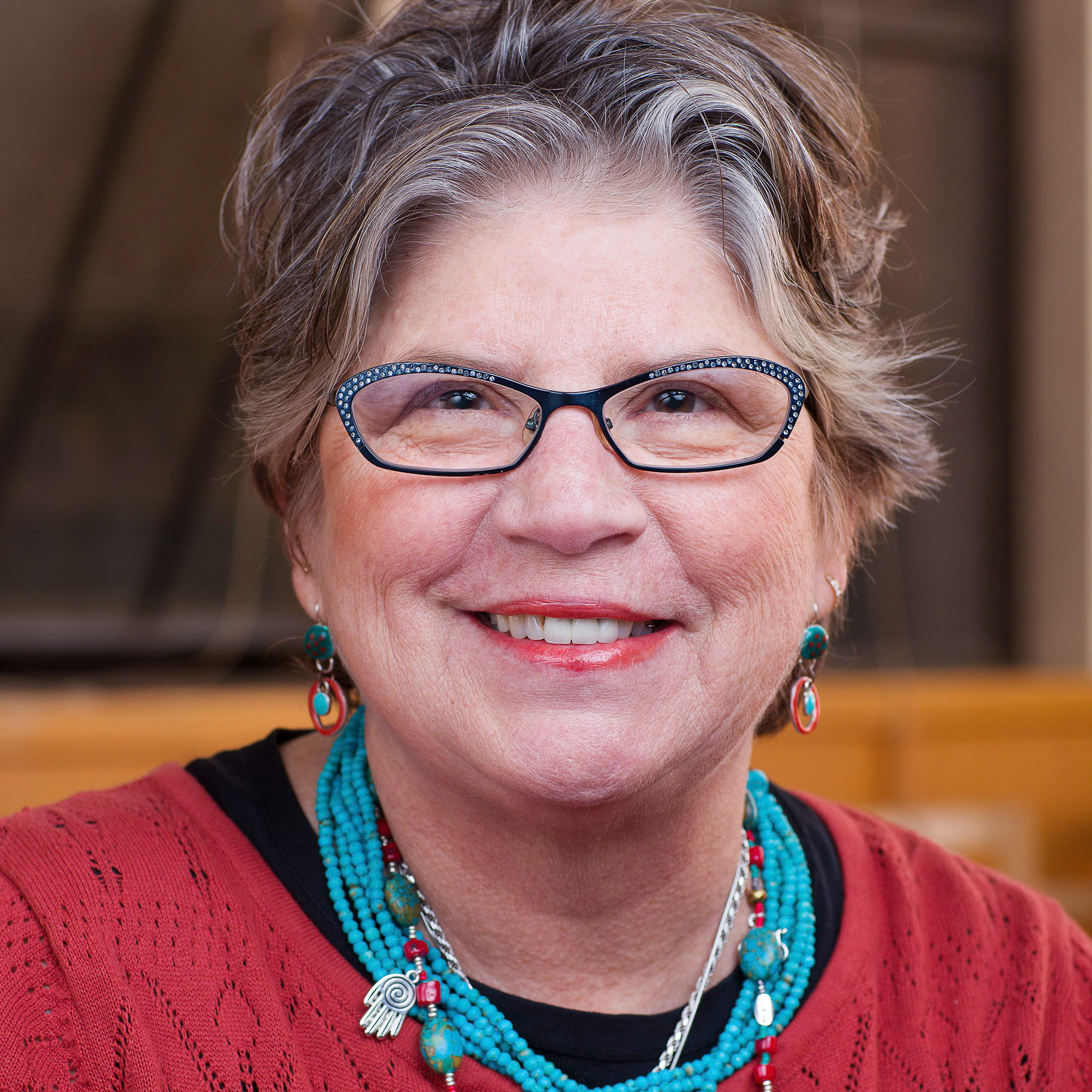
Marisol Berríos-Miranda was born in the working class neighborhood of Santurce, Puerto Rico, on May 15, 1955, the youngest child of Juanita Miranda and Pedro Berríos. Her maternal grandfather, Tomás Miranda, built their house on stilts at the edge of the swamp along the Martin Peña canal, and her grandmother, Agueda Hernández, who did not know how to read or write, was the light of her life.
Marisol’s upbringing in Santurce shaped her in many ways, including musically. Every Friday friends and family gathered to eat, dance and play dominos at her home. Her family’s social circles included Ismael Rivera, Rafael Ithier and other famous salsa musicians. Salsa music also became a part of her political identity when she became active in the Puerto Rican independence movement as a teenager. She and her friends celebrated salsa as an expression of their generation’s style, as a Puerto Rican alternative to English language rock. They were cocolos, not rockeros.
Marisol began piano lessons in high school and chose to major in music when she enrolled at the University of Puerto Rico in 1972. At UPR her beloved piano teacher, Irma Isern, taught her the music of Haydn, Mozart and Schubert, but scolded her for playing salsa montunos in the practice rooms. Marisol’s musical enthusiasm could not be so easily constrained, though, and upon graduating in 1981 (as the first person in her family to earn a college degree), she set her sights on graduate programs where she could focus on salsa music. Her quest led her first to San Jose State University and then to the University of California, Berkeley, where she began doctoral studies in 1986.
In 1990 she married her fellow graduate student, Shannon Dudley, with whom she found a bond in Caribbean music, and in dancing. (The first question Marisol’s mother asked about Shannon was, “Sabe bailar?”). The two spent a year in Trinidad and Tobago for Shannon’s research on steelbands, and another year in Venezuela for Marisol’s research on salsa music. In 1996 they moved with their two small children to Seattle, where Shannon had accepted a position at the University of Washington.
Marisol at first divided her time in Seattle between raising children, with her mother’s help, and writing her PhD dissertation, The Significance of Salsa Music to National and Pan-Latino Identity, which she finished in 2001. She eventually became an affiliate assistant professor in the School of Music and also taught courses in the Jackson School of International Studies, where she served for several years as the Assistant Director of Latin American Studies. From about 2015 to 2023 she taught regularly in the UW Honors program, where she found her greatest professional reward.
Her favorite class to teach was, “American Sabor: Latinos and Latinas in U.S. Popular Music.” American Sabor began in 2007 as a bilingual museum exhibit at Seattle’s Experience Music Project, for which Marisol was one of three guest curators, along with her husband Shannon and her colleague Michelle Habell-Pallán. The exhibit later travelled to 18 cities in the U.S. and Puerto Rico, and in 2018 American Sabor was published as a book with the University of Washington Press.
Marisol also published ground-breaking articles on salsa music that drew on her personal experience as well as her research. These include:
“Salsa as Expressive Liberation” (2004), which explains how Puerto Ricans experience salsa music and dancing in relation to their colonial status.
“El Gran Combo, Cortijo, and the Musical Geography of Cangrejos/Santurce” (2008), which explores the intersections of community and commercial music.
“Musical Childhoods Across Three Generations, from Puerto Rico to the U.S.A.” (2013), which reflects on dancing in the home (her own and her children’s) as a kind of musical training.
Marisol was also important in the lives of many people outside the university. She participated in Seattle community music organizations, including the Seattle Fandango Project and Movimiento Afrolatino Seattle, and for almost 10 years she played piano and güiro with Dingolay each month at Pam’s Caribbean Kitchen. Her home was a place for visiting artists to stay, and a space for fandangos and other music gatherings. Christmas eve (noche buena) at Marisol and Shannon’s house became a cherished annual event for many friends and family, combining carol singing and salsa dancing, arroz con gandules and pernil.
Marisol died on November 17th, 2025, from complications resulting from diabetic keto acidosis. She is survived by her husband, Shannon Dudley; her children, Agueda Gabriela Dudley-Berríos and Gabriel Ricardo Dudley-Berríos, and many other cherished relatives and friends who keep her in their hearts.
--Obituary by Shannon Dudley
References:
Berríos-Miranda, Marisol. 2004. “Salsa Music as Expressive Liberation,” Centro Journal 26(2): 159-73
Berríos-Miranda, Marisol and Shannon Dudley. 2008. “El Gran Combo, Cortijo, and the Musical Geography of Cangrejos/Santurce, Puerto Rico,” Journal of Caribbean Studies 36(2)
Berríos-Miranda, Marisol. 2013. “Musical Childhoods Across Three Generations, from Puerto Rico to the U.S.A.,” in Patricia Campbell and Trevor Wiggins, eds., The Oxford Handbook of Children’s Musical Cultures.
Berríos-Miranda, Marisol, Shannon Dudley and Michelle Habell-Pallán. 2018. American Sabor: Latinos in U.S. Popular Music, co-authored with Michelle Habell-Pallan, Marisol Berríos-Miranda. Seattle: University of Washington Press.