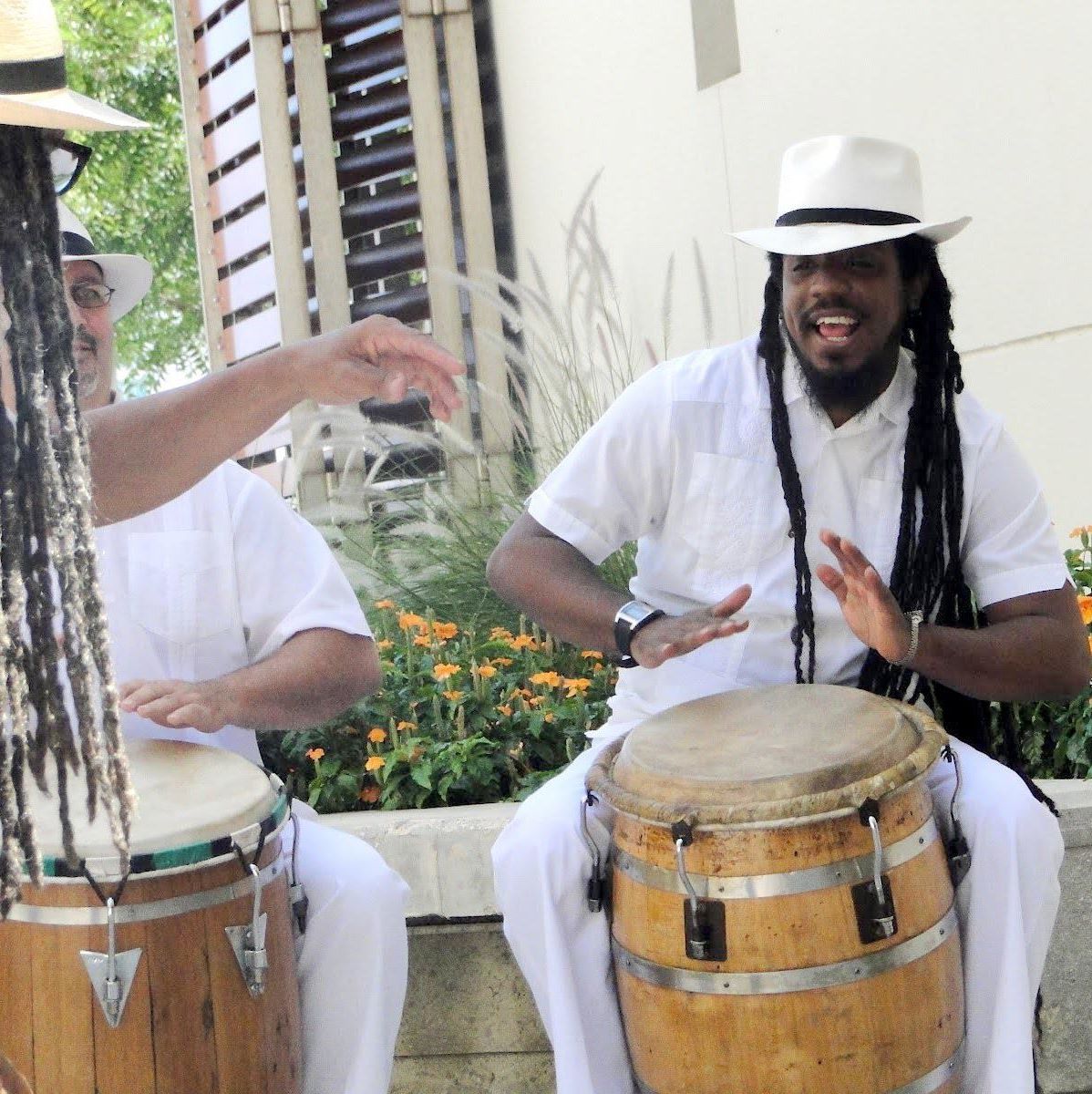
A master of the Afro-Puerto Rican dance and drumming tradition called bomba, Autumn Quarter Ethnomusicology Visiting Artist Otoqui Reyes is joined by special guests and his UW students in Dance and Music in this end-of-quarter performance.
Biography
Otoqui Reyes is a master of the Afro-Puerto Rican dance and drumming tradition called bomba. Reyes was raised in Loiza Aldea, a community with an influential bomba tradition, and also learned other regional styles of bomba. He performed for several years with the Cepeda family, one of bomba’s foremost culture bearers, in the community of Santurce. He also performed in his father’s pioneering group, Agüeybaná, who helped popularize participatory “bombazos” in the 1990s.
Bomba
Bomba is a centuries old tradition in Puerto Rico, practiced both in slave plantations and free Black communities. It is related to several other Caribbean dance drumming traditions, including gwoka in Guadeloupe, tumba francesa in Cuba, and Bele in Martinique, all of which have roots in Haiti. These traditions all involve a dynamic relationship between sound and movement. In the case of bomba, as it is practiced today, a single dancer improvises while a lead drummer, or subidor, sounds the dancer’s movements. This improvised duet between dancer and drummer is accompanied by percussion and singing in the batey, a native Taino word for a circle in which people conduct play or ritual.
The bomba ensemble includes two drumming roles: a single subidor (also called primo), which sounds the dancer’s movements, and one or more buleador drums that accompany the subidor with a steady rhythm. The drums are accompanied by call and response singing, by the cuá (a barrell struck with sticks) and by a single maraca, usually played by the lead singer.