
The UW Composition Program presents a concert of world premieres of original works by UW students Scott Humphreys, Michaela Klesse, James Larson, Ben von Jess, and Kevin Wang—students in Professor William Daugherty's introductory composition class--as well as well as pieces by student composers Oliver Schoonover and Amelia Matsumoto.
Program
Oliver Schoonover: - the piano remembers being a maple tree
Doogan Townsend, piano
Amelia Matsumoto - ある霧がかった朝 On One Foggy Morning
Eddie Mospan (Double Bass) and Amelia Matsumoto (Double Bass)
*Ben von Jess - as a bottle
*Michaela Klesse - the butterfly knight and his son
*James Larson - Flow Treatment
*Kevin Wang - Nota Flora
*Scott Humphreys - Sans qu’on le sache/ Le repli
*Musicians: Ben von Jess, trumpet, trombone; James Larson, ARP 2600, bowed cymbal, amplified kalimba, melodica; Kevin Wang, piano; Michaela Klesse, violin; Scott Humphreys, double bass; Bill Dougherty, conductor, den den
Program Notes
Oliver Schoonover - the piano remembers being a maple tree
Pianos are made from a variety of different woods, but the body of Steinway pianos are made of hard rock maple. A piano is probably the most beautiful thing a maple tree could be chopped down to create, but that doesn’t mean the maple tree wasn’t killed all the same. This piece is a celebration of the beauty of both the living maple tree and the piano it became, but also a grappling with the discomfort of this transformation. The pianist is an equal partner in helping the piano to remember, centering the pianist as a human being, with many ways of making sound beyond pressing the keys. Many of us have complex networks of memories and feelings related to the piano, ranging from love, nostalgia, comfort, shame, fear, and this piece explores all of these feelings.
Amelia Matsumoto - ある霧がかった朝 [On One Foggy Morning]
Content Warning: Violence and Death
On one foggy morning,
a murder.
On the serene, shrouded beaches of Saint-Irénée,
a murder
occurs.
One person with deep rooted pain
approaches,
and another sits with stillness.
A rock is brought down:
Once, Twice, Three times, Four times…
And a person succumbs.
Ben von Jess - as a bottle
When I started my process, I was inspired by the particular instruments I was working with. I was particularly interested in the melodica’s ability to play chords while still sustaining its sound and increase in volume. The chordal swelling of the melodica brought me to think of the rolling tide and wave motion. From there, discovering different parts of the ocean–the beauty, the flow, and the vast nature of the ocean revealed the story behind the piece. Following these different parts of the ocean was exciting for me to explore. What would it be like to experience these different moods, floating through them freely? I spent time utilizing each instrument in various ways, creating unique textures, ranges, and even having them mimic animal sounds. As it would for a bottle drifting through the ocean, the story of this composition was gradually revealed to me.
Michaela Klesse - the butterfly knight and his son
From the very beginning of this composition, I hungered for some contrast of sharpness and softness. To sound out vicious energy versus a gentleness. From this abstract concept emerged the butterfly knight. A siege of the palace is taking place and a noble butterfly knight is fighting an adversary. Their fierce confrontation is underscored by an aggressive, unyielding sixteenth-note texture. This intensity gives way to softness as the delicate kalimba introduces the butterfly knight’s son. He toddles about, unaware of the fighting that occurs in the courtyard below his chambers. His mother joins him with the support and grace of the violin, before the son tries to imitate the meter of his father's theme. Then, the air sours as both mother and son realize something is wrong. They gaze into the courtyard and find the body of the butterfly knight lying still against the wall. The piano cradles him in a death melody as the son and mother mourn in tears. But, hearing the crying of his family, the butterfly knight miraculously stirs to life. Renewed with vigor, his opening melodic material returns. The butterfly knight hugs his wife, picks up his son, and together they charge through the castle with a new ambition. To escape.
James Larson - Flow Treatment
I was a problem child in elementary school. To calm me down, my ever-patient teachers let me bring an electric piano to class — and somehow, that worked.
Even today, messing around with an instrument is a sacred pastime. Whenever I’m stressed, upset, or overwhelmed, the remedy I desire most is a flow state. This piece is a love letter to that groove.
The finger-drumming throughout this composition might sound familiar to the trained ear. I’m using drum samples from The Winstons’ seminal track “Amen Brother,” maybe the most sampled song of all time. As an electronic producer by specialty, I’ve always loved the shared language of sampling and remixing. The intersection of the electronic and the acoustic is a unique place in modern music and one I’m happy to explore.
Thank you for coming and supporting us all, Have a wonderful summer break!
Kevin Wang - Nota Flora
Nota Flora was inspired by my appreciation of flowers and their beauty in the different stages of their life cycle. As my fourth year living in Seattle, I adore the way the streets and parks transform during the springtime blossoms, with iridescent petals gathering along the sidewalks and branches slowly filling with color. The many floral scenes in the city led me to compose a piece that aimed to reflect those images. At times, I imagined the music as the flower itself through its gradual growth and changing forms. In other moments, I envisioned the music as more of the surrounding scene, almost like a soundtrack to a spring landscape filled with flowers. Rather than following a strict narrative, the piece aims to capture fragments of those impressions. Nota Flora became a way for me to translate something visual into music, a literal note on flowers
Scott Humphreys - Sans qu’on le sache/ Le repli
There is a rhythm, it is insistent.
There is a melody that can’t keep its promise.
There is a moment when you realize you have gotten used to something.
Have you gotten used to it?
The piece takes its title from the observation that even when alarm bells
can go off, we, as a population, can be unaware of the withdrawal
around us as progress is reversed, voices are silenced, and the erosion
becomes a new norm.
Director Biographies

William Dougherty is an American composer, sound artist, educator, and writer who joined the University of Washington faculty in January 2025. Dougherty's works have been performed internationally by ensembles including BBC Scottish Symphony Orchestra (Glasgow), The Sun Ra Arkestra (Philadelphia), Yarn/Wire (New York), Ensemble Phoenix (Basel), TILT Brass (New York), Ensemble for New Music Tallinn (Estonia), JACK Quartet (New York), and Talea Ensemble (New York). His music has been featured in festivals such as Tectonics Glasgow (2023), IRCAM's ManiFeste (2019), musikprotokoll (2018), Donaueschingen Musiktage (2017), New Music Miami (2017), Tectonics Festival New York (2015), the New York City Electroacoustic Music Festival (2015), the 47th Internationale Ferienkurse für Neue Musik in Darmstadt (2014), the New York Philharmonic Biennale (2014), and broadcast on BBC Radio 3.
Dougherty was the recipient of the Luciano Berio Rome Prize in Music Composition from the American Academy in Rome. He has received additional recognitions, awards, and fellowships from Harvard University's Radcliffe Institute for Advanced Study, Columbia University's Institute for Ideas & Imagination, Civitella Ranieri Foundation, the American Academy of Arts and Letters, Gaudeamus Muziekweek, the Internationale Gesellschaft für Neue Musik (IGNM/ISCM), the Aaron Copland House, SEAMUS/ASCAP, BMI, PARMA Recordings, the PRS for Music Society, the American Composers Forum, the Philadelphia Orchestra Association, the Institute for European Studies, and the UK Foreign Aid and Commonwealth Office.
Dougherty earned his Doctorate of Musical Arts (DMA) degree at Columbia University in New York City, where he taught and assisted undergraduate courses in composition, music technology, and music theory at Columbia University. He previously served on the composition faculty at Temple University.
Dougherty graduated with a Bachelor’s in Music Composition from Temple University’s Boyer College of Music and Dance in Philadelphia where he studied with Maurice Wright, Richard Brodhead, and Jan Krzywicki. As a Marshall Scholar, Dougherty earned his Master’s from the Royal College of Music in London studying with Kenneth Hesketh and Mark-Anthony Turnage after which he completed supplementary studies (Ergänzungsstudium) under the guidance of Georg Friedrich Haas at the Hochschule für Musik Basel in Switzerland. In 2018-19, William completed the Cursus Programme in composition and computer music at IRCAM in Paris while in residence at Cité Internationale des Arts.
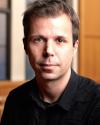
Huck Hodge is professor and chair of the composition program in the school of music. A composer of “harmonically fresh work", "full of both sparkle and thunder” (New York Times), his music has been praised for its “immediate impact” (Chicago Tribune), its "clever, attractive, streamlined" qualities (NRC Handelsblad, Amsterdam), and its ability to "conjure up worlds of musical magic” with “power and charisma" (Gramophone Magazine, London). There is a dramatic interplay of color, light, and darkness in his music, which emerges from an uncanny blending of pure and dissonant harmonies, widely spaced orchestrations and vast, diffuse timbres.
Hodge is the recipient of many prestigious awards and distinctions. Among these is the Charles Ives Living, the largest music award conferred by the American Academy of Arts and Letters. His other major awards include the Rome Prize (Luciano Berio Fellowship), the Gaudeamus Prize, a Guggenheim Fellowship, commissions from the Koussevitzky Foundation in the Library of Congress, the Fromm Foundation at Harvard University, the American Composers Forum (JFund), the Barlow Endowment, Music at the Anthology (MATA), the American Academy in Rome, Muziek Centrum Nederland, Musik der Jahrhunderte, and the National Theater and Concert Hall of Taiwan, in addition to multiple grants and awards from ASCAP, the Bogliasco Foundation, Copland House, the Deutscher Akademischer Austauschdienst (DAAD), MacDowell, New Music USA, the Siemens Musikstiftung, and Yaddo.
His music has been performed at Carnegie Hall, Lincoln Center and at numerous major festivals — the New York Philharmonic Biennial, Berliner Festspiele, Gaudeamus Muziekweek, Shanghai New Music Week (上海当代音乐周), ISCM World Music Days, and many others in over twenty countries on six continents. Other performances include those by members of the Berlin Philharmonic and Ensemble Modern, the ASKO / Schönberg Ensemble, the Seattle Symphony, and the Orchestra of the League of Composers. His chamber music has been premiered, performed and recorded by a long list of soloists and ensembles such as the Daedalus, JACK, Mivos, and Pacifica string quartets, the Adapter, Aleph, Argento, Dal Niente, Divertimento, Insomnio, SurPlus, and Talea ensembles, and his colleagues David Gordon, Donna Shin, Cristina Valdés, Cuong Vu, and Bonnie Whiting. His published music is distributed by Alexander Street Press (US) and Babel Scores (France). Recordings of his music appear on the New World and Albany record labels and have been featured in numerous national and international broadcasts.
Before joining the University of Washington, Hodge taught composition at Columbia University, where he earned his M.A. and D.M.A. studying with Fred Lerdahl, George Lewis, and Tristan Murail. Prior to this, he studied composition, theory, and new media at the Staatliche Hochschule für Musik und Darstellende Kunst in Stuttgart, Germany, with Marco Stroppa and Georg Wötzer as well as music, German literature and philosophy at the University of Oregon and the Universität Stuttgart. He has been a visiting professor/invited lecturer on music and aesthetics at a variety of institutions including the University of Chicago, CNMAT/UC Berkeley, UCSD, Columbia University, Eastman School of Music, Manhattan School of Music, NYU, and the Universität der Künste in Berlin, and he served for three years as the director of the Merriman Family Young Composers Workshop at the Seattle Symphony.